
The Atria System
Built Around How Beekeepers Work
Atria is designed around real beekeeping — how people move, where strain builds up, and what makes inspections sustainable over time.
Instead of asking beekeepers to adapt to the equipment, the system adapts to the beekeeper.
A Beekeeper-First Approach
Most traditional systems rely on stacking, lifting, and awkward movement. Over time, that strain affects how often and how carefully bees are inspected.
Atria prioritizes access, balance, and gross body movement, reducing unnecessary strain while keeping beekeeping fully hands-on. It is not automation or a shortcut — it is a system designed to support better beekeeping over the long term.
How the Atria System Works
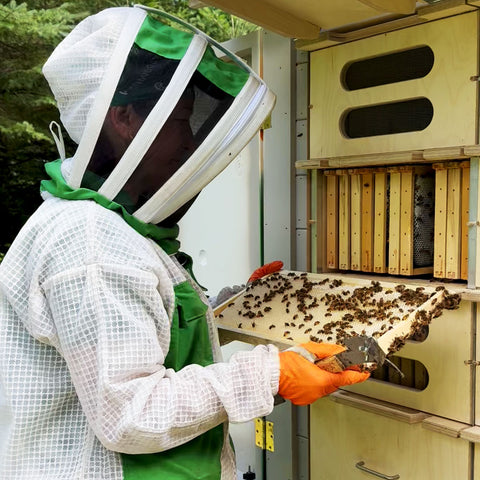
Atria is a vertical beekeeping system contained within a single enclosed structure. Inspections are performed from the rear, away from the bees’ flight path.
The brood chamber is accessed top-down through a drawer-based design, while honey frames are inspected horizontally, sliding out one at a time like books on a shelf. Internal dividers manage space without lifting or dismantling the hive.

Built for Real Conditions
Atria systems are designed to live outdoors and be worked season after season.
Materials, insulation, ventilation, and structure are treated as essential — guided by longevity, repairability, and performance in demanding climates. Atria is designed and built in Canada and tested through years of real-world use.
One System, Multiple Configurations
The same Atria system logic runs through every configuration, allowing beekeepers to choose the format that fits their space, scale, and access needs without learning a new system.
